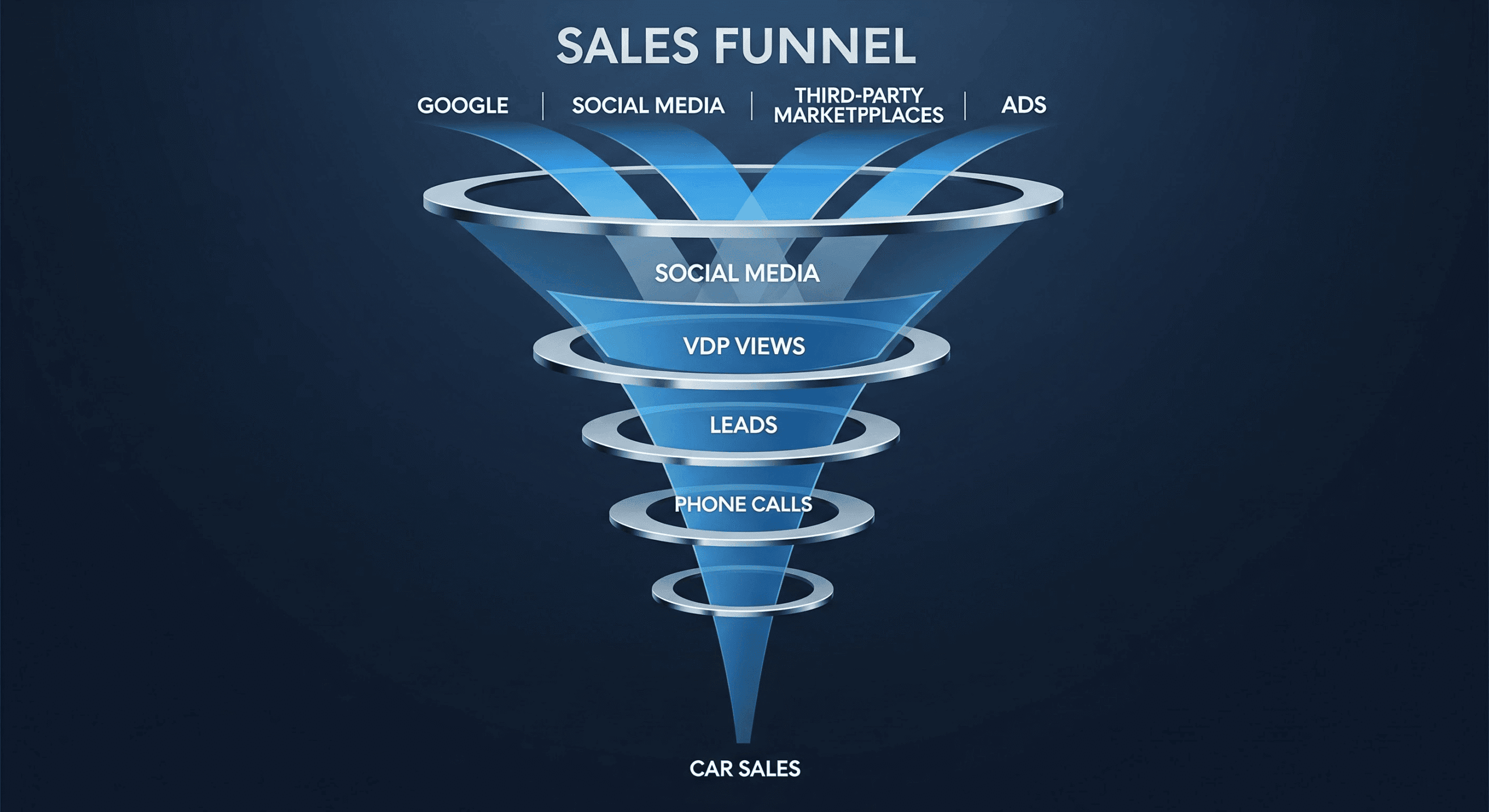
For a dealership, traffic is not just “visits”—it is the digital equivalent of foot traffic hitting your showroom. When a GM understands how traffic flows, where it leaks, and how it converts, they gain control over monthly sales volume instead of simply reacting to it. This is the foundation of DKOT: mastering the truth behind website traffic as a business-critical system.
dkot-image-2
What Traffic Really Represents in Automotive Retail
Traffic is demand in motion. Every visit represents a shopper somewhere in the buying journey:
- Some are early-stage researchers.
- Some are comparing payments.
- Some are staring at a VDP ready to walk in within 72 hours.
- Some are service customers who will return later to buy.
Traffic is never random.
Traffic always tells a story about buyer intent.
When traffic rises, your market is heating up.
When traffic drops, it signals a demand issue or a visibility failure.
A GM who understands this can fix sales at the source—not at the desk, not in the BDC, but at the top of the funnel where demand is created.
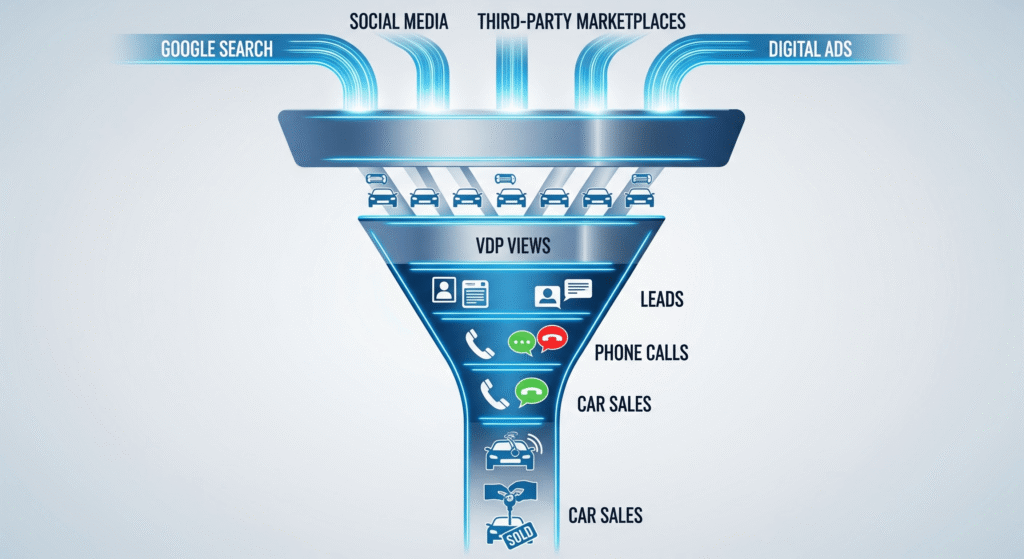
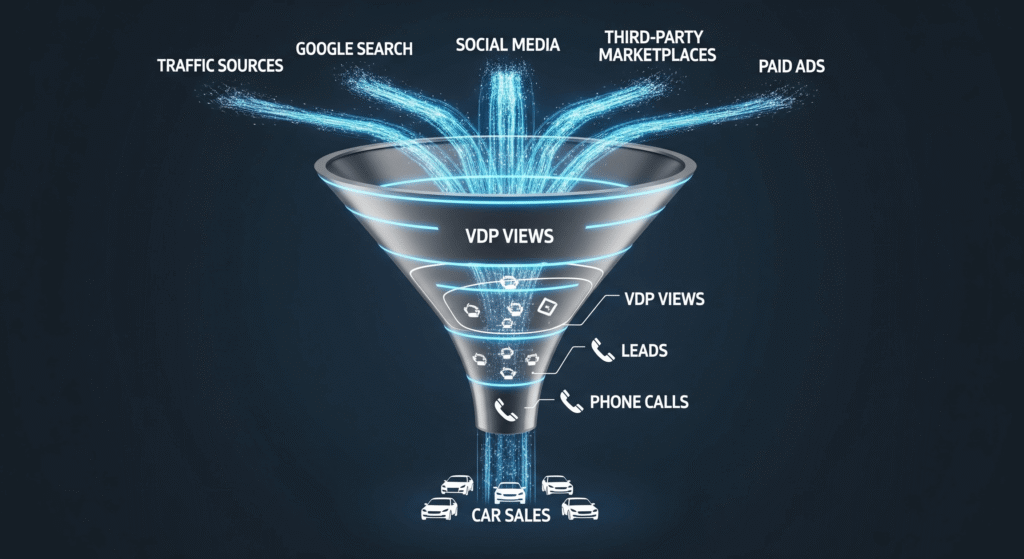
How Traffic Moves Through the Sales Funnel
1. Awareness Traffic → “Who Are You?”
This is the top of the funnel. Shoppers land on:
- Homepages
- Blog content
- Google Business Profile
- OEM links
This traffic is high volume but low intent. Its main purpose is to introduce your brand.
GM Insight: If awareness traffic is shrinking, your market visibility is weakening.
2. Consideration Traffic → “What Do You Sell?”
This includes:
- Search results (SRPs)
- Model research pages
- Special offers pages
- Used inventory lists
This is mid-funnel. Shoppers are now comparing, browsing, and analyzing options.
GM Insight: Consideration traffic drops when SEO is weak, ad budgets are misaligned, or inventory isn’t syncing correctly.
3. Conversion Traffic → “I’m Ready.”
This is the most important class of traffic. It includes:
- VDP views
- Payment calculators
- Trade-in tools
- Digital retailing workflows
- Contact forms
- Click-to-call
These visitors are closest to purchase.
GM Insight:
High VDP traffic = high sales month.
Low VDP traffic = sales suppression even if demand exists.
dkot-image-3
The Critical Conversion Levers That Traffic Controls
1. Lead volume
Lead volume rises or falls in direct proportion to conversion-quality traffic.
2. Phone calls
Calls are usually the highest-intent signal—but often under-tracked.
3. Showroom visits
There is a predictable correlation:
More VDP views → More visits → More sales.
4. Appointment set and show rates
BDC performance is limited by the type of traffic entering the funnel.
Why GMs Must Understand Traffic as a Sales System
Most GMs react to the symptoms (low leads, low floor traffic, low sales).
Few inspect the root cause: traffic health.
To manage traffic is to manage demand.
To manage demand is to manage sales.
If traffic is the fuel, then the website is the engine—and the GM must treat it as such.
Common Traffic Problems That Suppress Sales
- Poor search visibility
- Weak Google Business Profile optimization
- Slow website load speed
- Low VDP visibility
- Bad inventory feeds
- Ineffective ad budget distribution
- Poor attribution data
- Third-party dependencies
- Inconsistent NAP data
- Broken digital retailing flows
When these systems break, the “gas network” starves the website.
A GM who understands these points can solve sales issues days or weeks before the numbers dip.
GM Takeaway: Traffic Is a Sales Forecast
Traffic patterns predict what your next 30–60 days will look like.
You can’t fix sales without fixing traffic.
Traffic → Engagement → VDP Views → Leads → Sales
This is the truth behind the modern dealership pipeline.